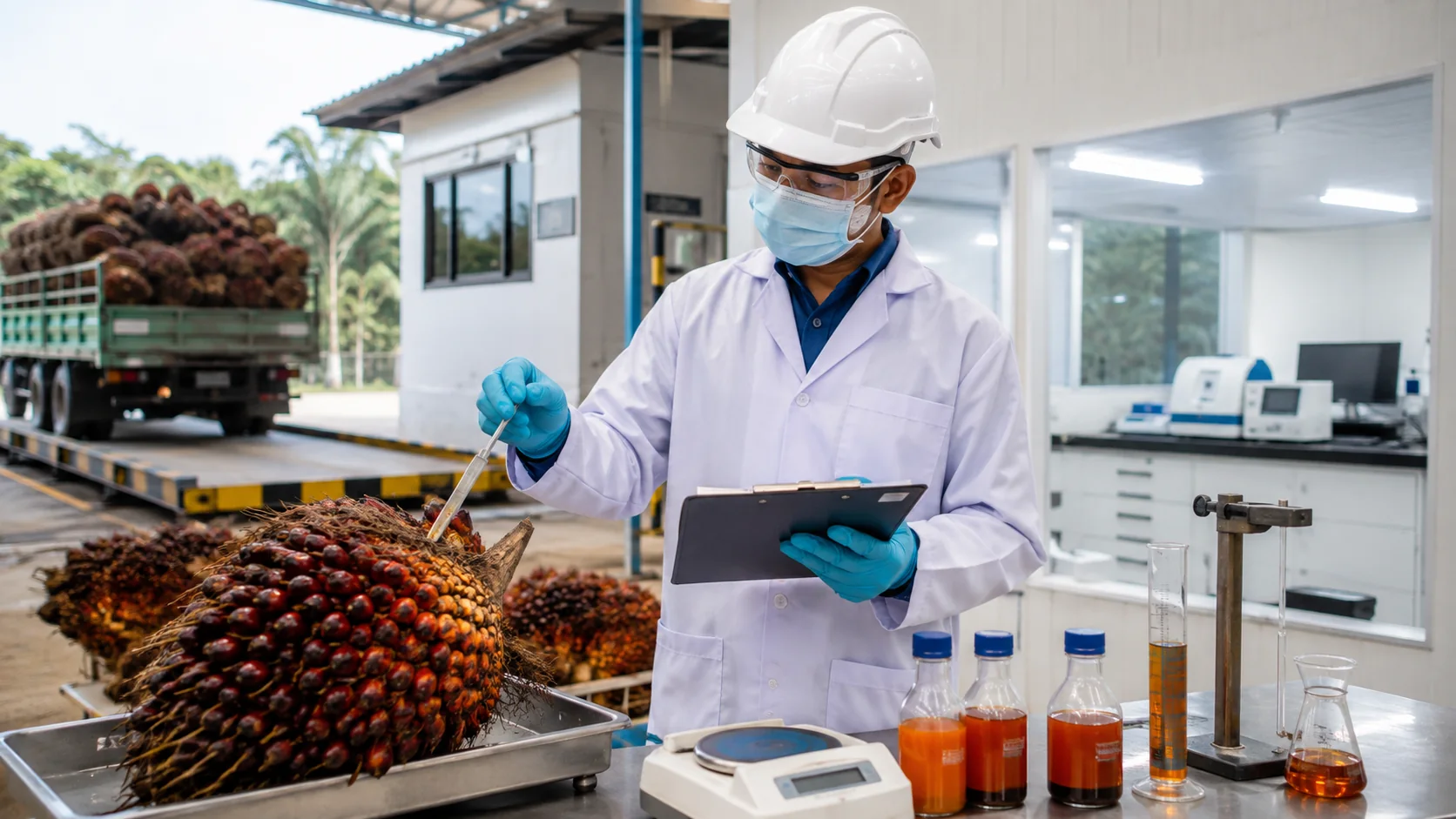
Quality control starts
before the fruit enters the mill.
FFB quality affects extraction performance and the quality of the produced oil. RSEC therefore treats receiving inspection, weighbridge control, visual sorting and process-side quality checks as part of the commercial chain — not as an afterthought.
At the mill gate, the first layer is manual acceptance: ripeness, loose fruit, stalk condition, contamination and visible deterioration are checked during receiving. Routine sampling and mill-side laboratory checks may then be performed by qualified operating QC personnel under the agreed mill arrangement. When the contract, buyer or shipment requires neutral certification, an appointed independent surveyor or third-party inspection agency performs the required independent quantity and quality verification.
PT Indo Mulia Karya (IMK) may maintain or coordinate qualified routine origin-side QC support for FFB receiving checks, weighbridge and documentation control, routine sampling, process follow-up and mill laboratory testing under the agreed operating scope. Independent certification remains separate whenever a neutral third-party certificate is required.
Routine operating QC and independent certification are separate functions: IMK can support the former, while an appointed surveyor provides independent verification when contractually required.
Certification and paperwork requirements depend on the buyer and destination market. In practice, CPO transactions commonly rely on origin licensing, shipment documents, producer COA, independent inspection where agreed, and sustainability or traceability frameworks when demanded by the customer.
- Common market references: ISPO, RSPO or buyer-specific sustainability requirements.
- Transaction controls: COA, weighbridge records, sampling records and surveyor reports where applicable.
- Destination sensitivity: final export compliance can differ by country, end-user and food / industrial application.